
Air sampling (indoor and outdoor comparison)
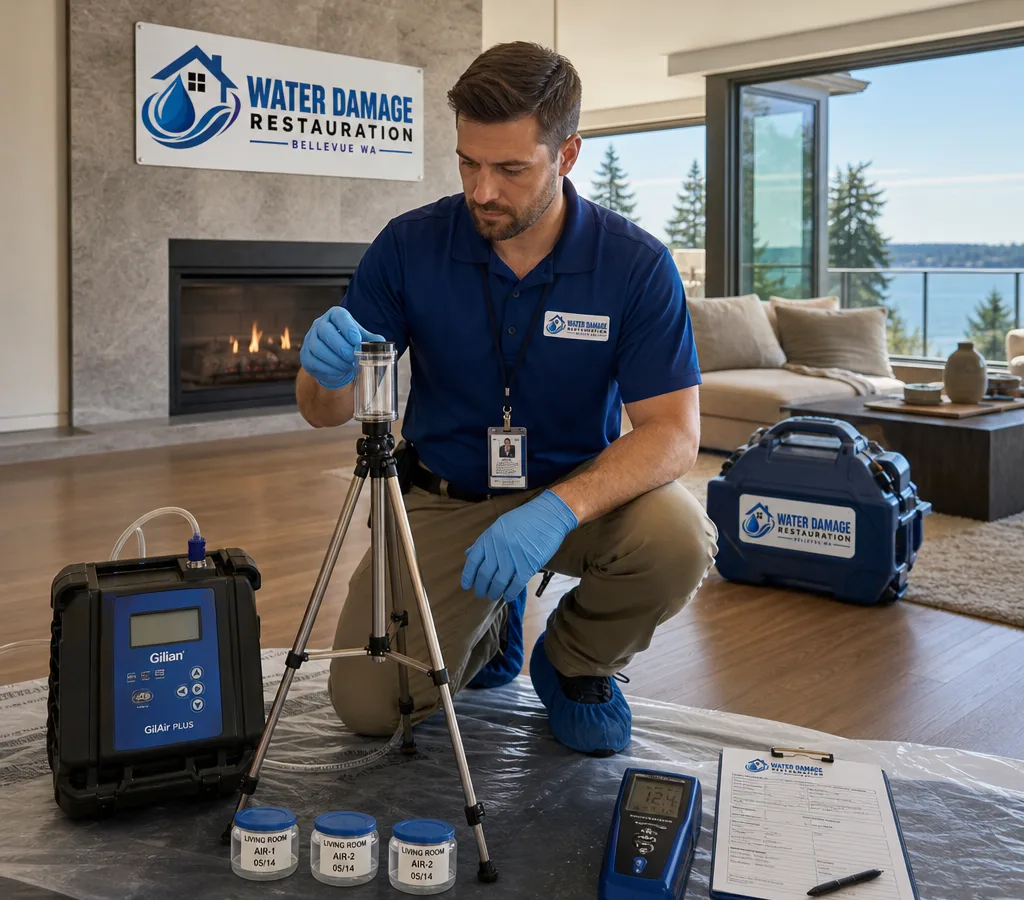
Air samples help evaluate whether indoor spore levels and types look elevated compared with outdoor air. We place samples strategically so the results reflect real conditions in the occupied space.
Mold testing · Bellevue, Washington
If you smell something musty, see staining, or had a recent leak, testing is the fastest way to confirm what is in the air and on surfaces. Get clear sampling results, moisture findings, and practical next steps for your Bellevue home or business.
Know when testing helps
Mold problems usually start with moisture, not visible growth. Mold testing in Bellevue, WA is most useful when you need answers you can act on: whether there is an indoor air problem, where moisture is coming from, and what to do next.
Testing is commonly scheduled when:
Bellevue homes range from older properties near Downtown and Wilburton to newer builds in Somerset and Factoria. Across the Eastside, long damp periods make small plumbing leaks, window condensation, roof flashing issues, and crawlspace humidity more likely to become mold concerns when they are not addressed quickly.
Inspection, sampling, and reporting
A professional mold inspection is more than taking one air sample and emailing a number. Our process starts with a building-science look at moisture and air movement so the sampling plan matches the situation.
A typical scope includes:
If you also need help after a leak, our water damage restoration work focuses on drying, monitoring, and returning materials to a stable moisture condition so mold does not have the environment it needs to grow.
Request Emergency Service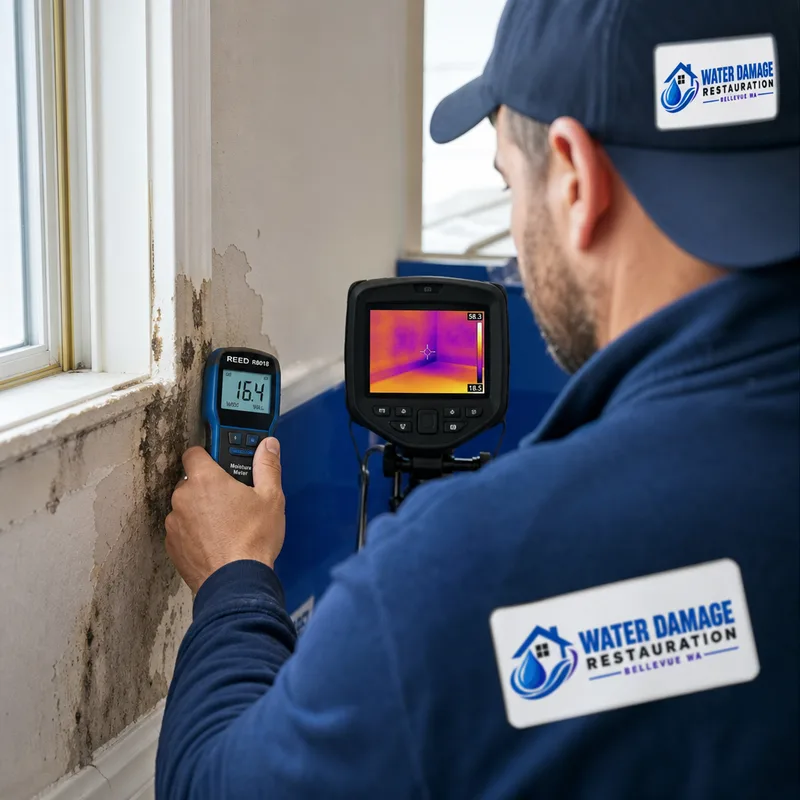
Evidence matched to the property
Air samples help evaluate whether indoor spore levels and types look elevated compared with outdoor air. We place samples strategically so the results reflect real conditions in the occupied space.
Swab or tape-lift samples help identify suspect growth on building materials when a visual finding needs confirmation. This is often used on staining where the cause is unclear.
When evidence points to a hidden issue around a plumbing wall or window return, we can recommend targeted access for confirmation rather than guessing based on room air alone.
Moisture meters and careful documentation show where materials are wet or staying damp. Mold risk depends on moisture duration and material type.
If work has already happened, we can help plan reasonable follow-up sampling based on what was removed, how containment was handled, and whether remaining materials are dry and clean.
You receive a written record of sample locations, moisture observations, and lab results, suitable for property files, contractors, or a real estate transaction when needed.
From concern to written findings
Tell us what happened, including the leak date, where odor is strongest, and what was repaired. That context helps us choose the right tools and avoid unnecessary sampling.
We check likely sources first: bathrooms, kitchens, laundry areas, windows, and levels that have had water exposure. Moisture readings help distinguish an old stain from an active problem.
We collect air and/or surface samples based on the conditions found. A good sampling plan is targeted, documented, and repeatable.
Samples go to a lab for identification and counts. Once results are back, we review them in plain language, including the limits of what testing can and cannot prove.
If results suggest an issue, we outline the order of operations: correct the moisture source, isolate affected areas if needed, appropriately remove or clean impacted materials, and consider follow-up verification when warranted.
Rain-tested local context
Every building is different, but certain moisture patterns show up often in the Bellevue area.
Window and exterior wall condensation: During cool, wet months, indoor humidity and cold surfaces can create repeated condensation at windows and exterior corners. If finishes stay damp, mold can develop on paint, caulk, or drywall paper. Testing can help determine whether it is localized or affecting room air.
Crawlspaces and basements: Crawlspaces can accumulate humidity when vents and vapor barriers are not performing well or drainage keeps soil damp. Basements can hold moisture after seepage or minor flooding. We focus on readings and air movement because these spaces can influence the rest of the house.
Plumbing and appliance leaks: Slow leaks under sinks, behind toilets, around dishwashers, and at washing-machine connections can remain hidden until odor or swelling appears. A moisture map with targeted sampling is usually more informative than random air samples.
Roof and flashing leaks: A small roof leak can wet insulation or sheathing and appear later as ceiling staining. Here, inspection matters as much as the lab result because correcting the roof detail addresses the root cause.
When comparing mold testing Bellevue homeowners rely on, ask how the inspector chooses sample locations, how moisture is measured and documented, and how the results will become a practical plan.
Homeowner experiences
“We had a musty smell that came and went. The inspector found elevated moisture near a window return, took an indoor and outdoor air sample, and explained the results without trying to upsell anything. The written summary made it easy to decide what to fix first.”
“After a small bathroom leak we wanted to know if we were actually in the clear. The moisture readings and targeted sampling gave us peace of mind and a clear checklist for what to watch over the next few weeks.”
If you want fast, defensible answers, schedule an inspection that starts with moisture investigation and ends with a written plan you can use.
Call for Emergency HelpAnswers before your appointment
Mold testing cost depends mainly on how many samples are collected and how complex the inspection is, so pricing varies by home size and the questions you need answered. A small, targeted job might involve one or two samples, while a larger home with multiple suspected areas often needs a broader sampling plan plus more moisture mapping.
Most mold testing appointments take about 60 to 120 minutes on site, depending on access and how many locations need moisture checks and samples. We also plan time to review your concerns and document conditions so the lab results are meaningful.
Lab turnaround is commonly a few business days and can vary with lab workload and the analysis requested. We will explain what to expect at the appointment and follow up with a clear written summary once results are available.
The right choice depends on your goal: air sampling evaluates indoor air conditions, while surface sampling helps confirm what is on a specific material. We begin with a moisture-driven inspection and choose sampling that answers a specific question.
Usually no, because standard air and surface sampling is non-destructive and does not disturb large areas of material. If you have significant sensitivities, we can coordinate the appointment to minimize time in the areas being sampled.
You cannot directly sample inside a sealed wall cavity without access, but moisture meters and thermal imaging can identify where hidden dampness is likely. When evidence points to a concealed issue, we can recommend targeted access rather than opening large areas.
If there is clear, active growth, the priority is stopping moisture and correcting impacted materials safely; testing is most valuable when it changes the plan. Targeted testing can still document conditions, confirm questionable staining, or establish a baseline before or after cleanup.
Keep conditions as normal as possible for 24 hours before air sampling. Avoid heavy cleaning, fogging, or running new air purifiers that could skew results. Have photos of past leaks or repairs ready and ensure under-sink cabinets, laundry hookups, and attic access are reachable.
Start with evidence
Tell us what you are noticing and where it is happening. We will recommend a sensible testing plan for your Bellevue property and provide written results with straightforward next steps.