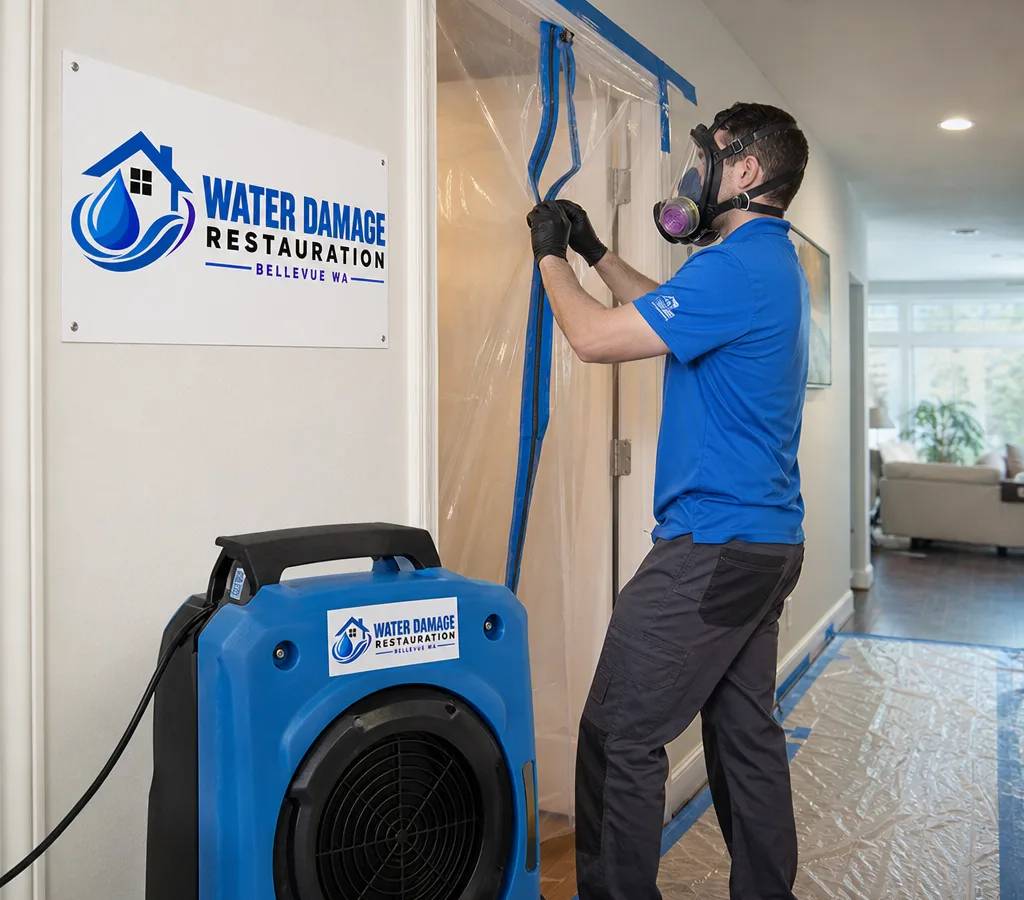
Technician in protective gear setting up plastic containment and a HEPA air scrubber in a Bellevue home
24/7 emergency response

Mold removal · Bellevue, Washington

Mold Removal Bellevue WA

If you smell musty odors, see staining, or have had recent moisture, our team can inspect, contain, and remediate mold with clear documentation and a practical plan to keep it from coming back.

24/7 emergency response Same-day stabilization Moisture mapping Cleanup through repairs

Immediate local guidance

Local mold problems need fast, careful containment

Searching for mold removal Bellevue WA usually means something has already changed in the space: a persistent musty smell, darker spots along baseboards, bubbling paint, or allergy symptoms that get worse indoors. In Bellevue, mold often shows up after a slow plumbing leak, a wet crawl space, a roof or window leak, or humidity trapped in bathrooms and laundry areas.

Our mold removal process focuses on two things at the same time:

  • Stop cross-contamination. Mold spores travel easily when material is disturbed. Proper containment and negative air help keep the rest of the home or suite clean.
  • Fix the moisture driver. Mold remediation that ignores the water source tends to turn into repeat work.

If the mold is tied to a recent leak, many homeowners start by coordinating remediation with Water Damage Restoration so drying, demolition, and cleanup happen in the right order and nothing gets sealed up wet.

We work in Bellevue homes and commercial spaces, including higher-density areas like Downtown Bellevue, where odor control and elevator or tenant protection matter, and neighborhoods with more crawl spaces like Lake Hills and Crossroads, where ground moisture and ventilation are common factors.

Request Emergency Service

A complete remediation scope

What you should expect from mold removal in Bellevue

A real inspection, not a guess

We start by identifying where growth is visible and where moisture is likely hiding—behind drywall, under flooring, in cabinets, around windows, and in crawl spaces or attics. You get a written scope you can understand before work starts.

Containment that matches the risk

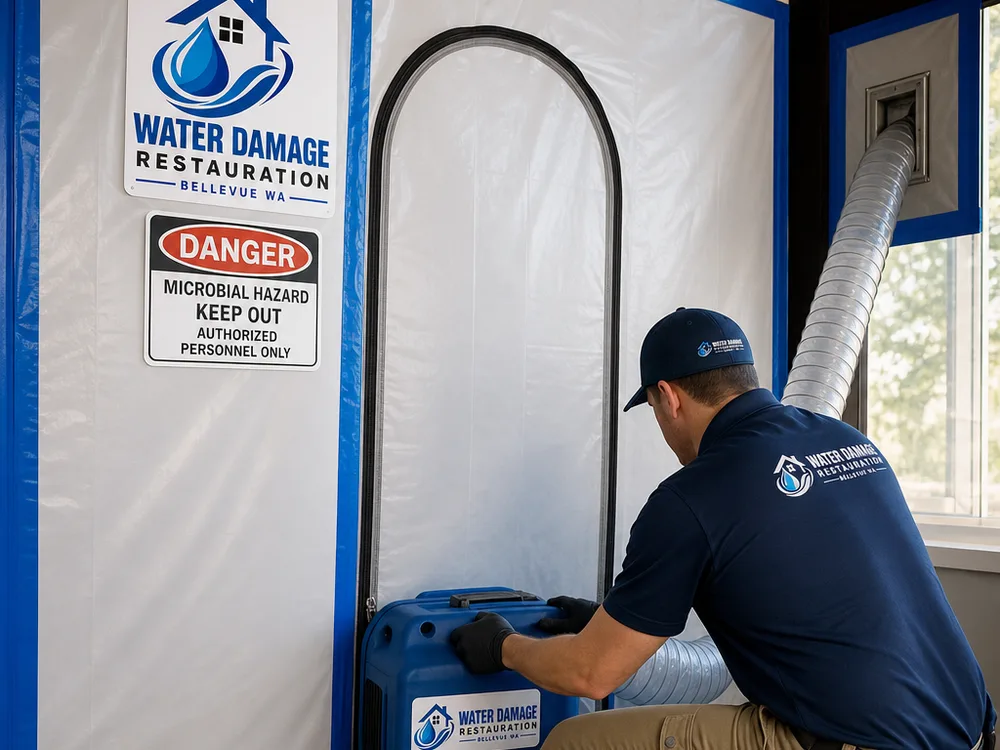
We use critical barriers, controlled entry, and negative air with HEPA filtration when disturbing contaminated materials. The goal is to keep spores from spreading into clean rooms, hallways, or common areas.

Safe removal of affected materials

Mold on porous materials often requires removal and disposal, including drywall, insulation, some ceiling tiles, carpeting, and padding. We handle controlled demolition so the space can be rebuilt without lingering contamination.

HEPA cleaning and detailed wipe-down

After removal, we HEPA-vac and clean remaining surfaces with appropriate antimicrobial cleaners for the substrate. This is especially important around framing, subfloors, and edges where dust collects.

Drying and humidity control

Mold does not stop until materials are dry. We use dehumidification and airflow as needed and explain which indoor conditions need to change, from venting and drainage to plumbing repairs.

Clear completion criteria

We walk the area with you at the end: what was removed, what was cleaned, what still needs reconstruction, and which maintenance steps reduce recurrence. For commercial work, we can align access and containment with building rules.

Request Emergency Service

From assessment to documentation

Our mold remediation process (step-by-step)

01

On-site assessment and scope

We look at the visible growth, likely moisture path, and affected materials. You get a straightforward explanation of what can be cleaned versus what must be removed.

02

Set up containment and negative air

Before demolition or aggressive cleaning, we isolate the work area with plastic barriers and establish negative pressure when appropriate. This is especially important in condos and occupied offices.

03

Remove contaminated porous materials

Impacted drywall, insulation, carpet pad, and other porous materials are carefully removed, bagged, and disposed of. We avoid unnecessary tear-out without leaving mold behind.

04

HEPA vacuum and surface cleaning

We HEPA-vac dust from framing and hard surfaces, then wipe and treat surfaces based on material type. Where staining remains but material is sound, we focus on cleaning and controlling the conditions that caused it.

05

Dry the structure

We verify drying progress and adjust equipment as needed. If the underlying issue is a leak or drainage problem, we identify it so it can be corrected before rebuilding.

06

Final walkthrough and documentation

We review what was done, which areas were addressed, and the next steps for repair or rebuilding. When coordinating with a property manager, we can provide documentation for their records.

Request Emergency Service
Contained mold remediation work zone with a zipper door, warning signage, and an air scrubber ducted to a window

Moisture patterns matter

Common mold scenarios we handle in Bellevue homes and buildings

Mold problems are usually moisture problems first. In Bellevue, we often see patterns like these:

  • Bathroom and laundry humidity: In homes and condos around areas like Wilburton, bathrooms without consistent exhaust use can keep drywall corners and ceilings damp enough to support growth.
  • Window and exterior wall condensation: Cooler seasons can increase condensation on windows and poorly insulated exterior corners, especially behind furniture where airflow is limited.
  • Crawl space moisture: Many Eastside homes have crawl spaces where soil moisture and poor ventilation can lead to mold on joists and subflooring.
  • Slow plumbing leaks: Leaks under sinks, behind dishwashers, around toilets, or at supply lines often create hidden mold that shows up as odor before staining.
  • Roof or flashing leaks: Attic or ceiling staining may appear after heavy rain. What looks like a small spot can have a larger wet area behind it.

If you are deciding whether you need mold removal in Bellevue or just cleaning, the key question is: Is the material porous, and has it been wet long enough for growth? Non-porous surfaces can sometimes be cleaned when the moisture issue is fully resolved, but drywall, insulation, and carpet padding frequently require removal once mold is established.

Request Emergency Service

If you want a clear answer on what is actually affected and what it will take to remediate it, we can inspect the area and provide a written scope that prioritizes containment, safe removal, and moisture correction.

Call for Emergency Help

Homeowner and property-manager experiences

Careful containment and clear communication

“We noticed a musty smell in a bedroom and found staining behind a dresser. The team explained the containment setup, removed the affected drywall, and cleaned the framing. The space smelled normal again and we got a clear list of what needed to be repaired to prevent it coming back.”

J. K.

“Our condo building required strict protection of common areas. They set up a tight containment, ran an air scrubber, and kept the hallway clean. Communication was straightforward from start to finish.”

M. R.

Answers before cleanup begins

Mold removal Bellevue: questions homeowners and property managers ask

How much does mold removal cost in Bellevue, WA?

Mold removal in Bellevue typically ranges widely because pricing depends on the size of the affected area, what materials must be removed, how hard the space is to access—such as an attic, crawl space, or area behind cabinets—and how much containment is required. A small, contained removal in an open area can cost far less than a multi-room project involving negative air, cabinet removal, or extensive demolition.

How long does mold remediation take once work begins?

Many mold remediation projects take 1 to 3 days for containment, removal, and cleaning, but drying time and the scope of demolition can extend the timeline. If materials are still wet when we arrive, drying and verification may add additional days before rebuilding should start.

Can you remove mold without tearing out drywall?

Sometimes, but only when the affected surface is non-porous or the growth is limited to the surface and the material is structurally sound. If mold has penetrated porous materials like drywall or insulation, removal is usually the correct approach because cleaning alone cannot reliably remove contamination embedded in the material.

Do you do mold testing as part of mold removal in Bellevue?

Mold testing is not always required to remediate, and many situations can be handled based on visible growth and moisture evidence. If you need testing for documentation or clearance planning, we can discuss options and coordinate timing so sampling does not delay needed containment and cleanup.

Is it safe to stay in the home during mold removal?

It depends on the location and size of the affected area and who is in the home. With proper containment and negative air, many projects can be completed while occupants remain elsewhere in the house, but people with asthma, allergies, or compromised immune systems may need a more cautious plan, especially if work is near bedrooms or HVAC pathways.

Will mold come back after remediation?

Mold can return if moisture returns, so the long-term fix is controlling the water source and indoor humidity. Remediation removes contaminated materials and cleans remaining surfaces, but preventing recurrence usually involves repairs or behavior changes like fixing leaks promptly, using bath fans consistently, and addressing crawl space or drainage moisture.

Contain the problem and correct the moisture

Need mold removal in Bellevue, WA?

Tell us what you are seeing—odor, staining, a recent leak, or a damp crawl space. We will inspect, explain what is affected, and provide a clear remediation scope with containment and cleanup steps you can trust.