
A musty odor that does not go away
Odor is often the first clue that moisture is trapped in drywall, under flooring, or in a crawl space even when surfaces look fine.
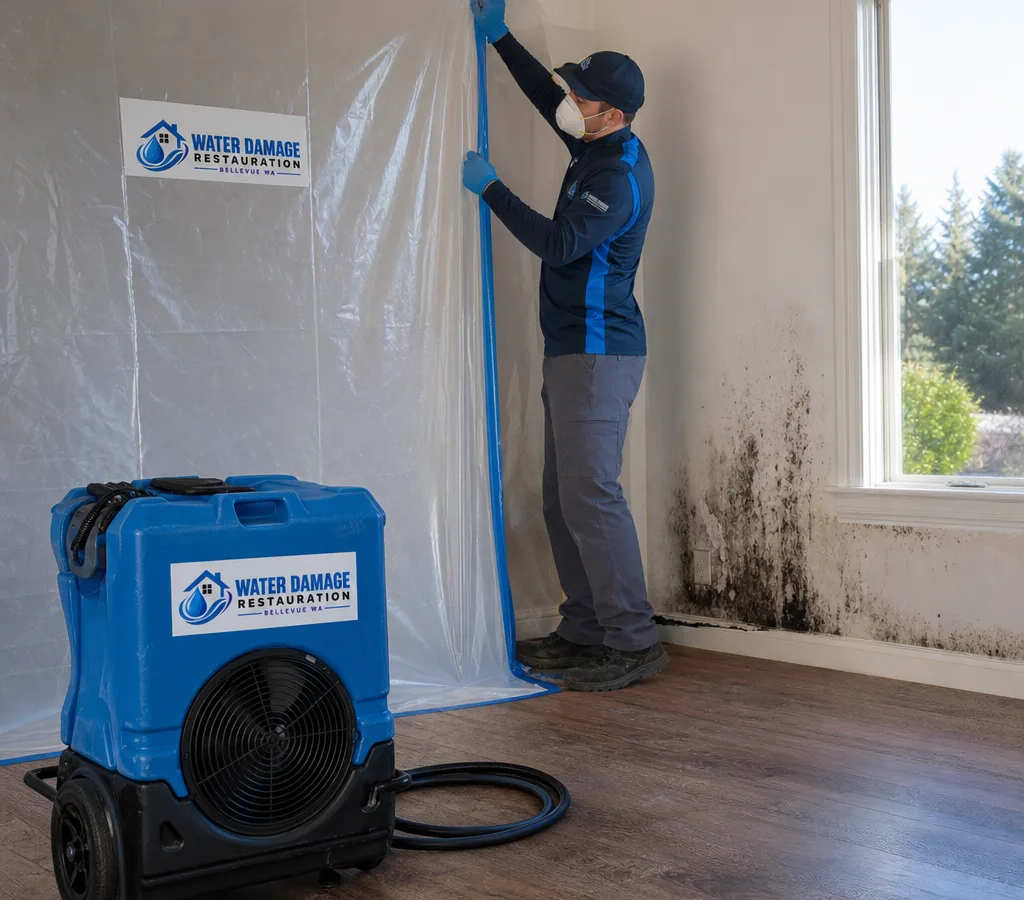
Mold remediation · Bellevue, Washington
If you are seeing visible growth or smelling a persistent musty odor, our team can inspect the area, contain it properly, and remove contamination so the space can be used safely again.
A complete remediation scope
A mold problem is rarely just the spot you can see. Effective mold remediation Bellevue work focuses on three things: finding the moisture source, stopping cross-contamination, and removing or cleaning affected materials to an appropriate standard.
A thorough scope typically includes:
In Bellevue, mold commonly shows up after plumbing leaks, window and roof leaks, and condensation in poorly ventilated spaces. Bathrooms, laundry areas, basements, and crawl spaces are frequent trouble spots, but any area that stays damp can grow mold.
If you are also dealing with active leaks or wet building materials, starting with water damage restoration often makes the remediation faster and more effective because drying and moisture control set the foundation for safe cleanup.
Bellevue property conditions
Bellevue's wet-season weather means buildings can stay damp longer after a leak, especially in shaded areas or where airflow is limited. That matters because remediation is not just removing growth. It is getting the structure dry enough that the problem does not return.
We also tailor the approach to how the property is built and used:
No matter the property type, the goal is the same: isolate the work area, remove contamination safely, and leave the space clean, dry, and ready for repairs.
Request Emergency Service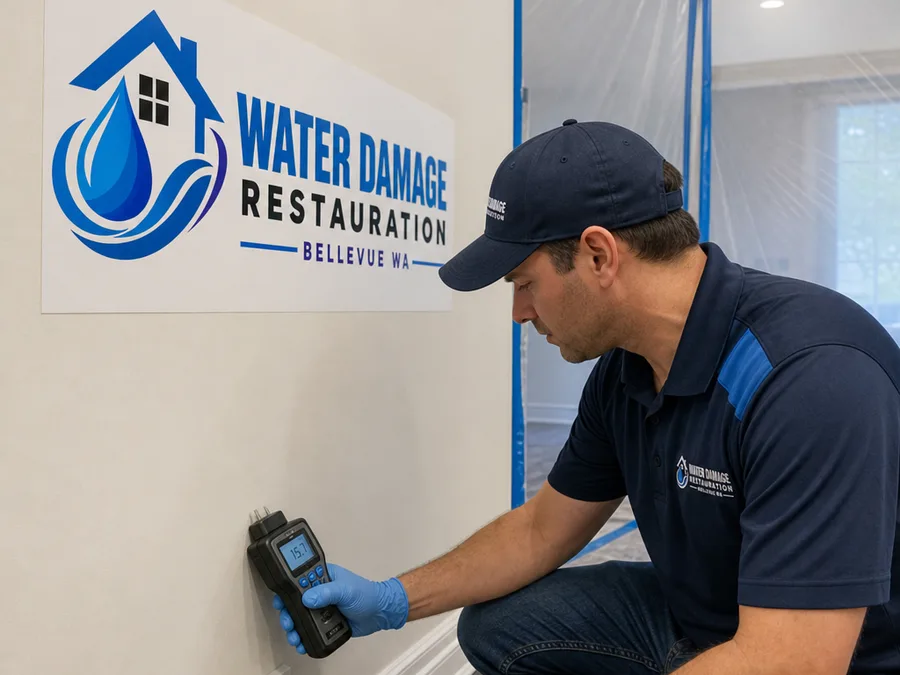
Know when to investigate
Odor is often the first clue that moisture is trapped in drywall, under flooring, or in a crawl space even when surfaces look fine.
If materials stayed wet for more than a day or two, mold can start to develop in hidden cavities. Early assessment can reduce how much needs to be opened up.
Growth on caulk, drywall, framing, or sheathing needs a controlled cleanup plan so spores are not spread while you try to scrub it.
Persistent condensation points to ventilation or humidity issues that can keep surfaces damp, especially in corners and behind cabinets.
If symptoms flare in one area, inspection helps narrow down whether moisture and mold are contributing and where remediation would be focused.
It is better to confirm conditions before closing walls or installing new finishes, since trapped moisture can damage new materials quickly.
From assessment to repair-ready
We identify likely moisture sources, document affected materials, and outline what will be cleaned versus removed. You get a straightforward plan before any disruptive work starts.
We isolate the work area with critical barriers as needed and use HEPA filtration to control airborne particles. Pathways and nearby belongings are protected based on the work zone.
Porous materials that cannot be reliably cleaned—often drywall, insulation, and some flooring underlayment—are removed and bagged out carefully to limit spread.
We HEPA vacuum and clean remaining framing, concrete, or other substrates as appropriate for the conditions, then address residue so the area is ready for drying and repairs.
Moisture control is what keeps mold from coming back. We monitor drying progress and confirm the space is in a condition that makes sense to rebuild.
Scope-based remediation pricing
Pricing for mold remediation in Bellevue depends on the scope and the building materials involved. A small, accessible area can be straightforward; a hidden problem that requires opening up finishes and drying cavities is more involved.
Key cost drivers include:
For a ballpark, many projects land somewhere in the low thousands to several thousand dollars, but the only responsible way to price it is after inspection. We can provide a written scope that explains what will be removed, what will be cleaned, and what conditions must be met before repairs begin.
Homeowner experiences
“We had a musty smell that kept coming back in the same bedroom. The inspection found damp drywall behind the baseboard. The containment was tidy, the cleanup was thorough, and the room finally smelled normal again.”
“A slow plumbing leak under the sink turned into mold in the cabinet and wall. The team explained what could be cleaned, what had to be removed, and what drying would look like. The process was clear from start to finish.”
If you think you have mold, start with an inspection and a written scope. It is the fastest way to understand what is affected, what needs to come out, and what it will take to get the space dry and ready to repair.
Call for Emergency HelpAnswers before cleanup begins
Many mold remediation projects take 1 to 3 days for containment and cleanup, but drying and rebuild timing depends on how wet the materials are and how much needs to be opened. In Bellevue's damp months, drying can take longer if the moisture source was active for a while or airflow is limited, so we plan the work around moisture readings rather than the calendar.
Often you can stay in the home if the work area can be fully contained and there is a clean path in and out for technicians, but it depends on the location and size of the affected area. If the mold is in a main living space, if multiple rooms are involved, or if a household member has heightened sensitivity, temporary relocation can be the safer choice during the most disruptive phases.
Yes, remediation is usually based on visible conditions and moisture intrusion, not on lab results, because any indoor microbial growth should be removed and the area dried. Testing can be useful in specific situations, such as when you need a baseline for documentation or when you are trying to confirm whether an odor is connected to hidden growth.
If mold is in a cavity, the practical solution is controlled demolition to access the area, followed by cleaning of the remaining framing or subfloor and proper drying. Trying to treat it through a small hole or by spraying chemicals through a vent opening usually leaves contamination and moisture in place, which is why access and containment are central to a proper plan.
Surface cleaners can remove staining on some hard surfaces, but they do not fix the underlying moisture and they are not a substitute for containment and proper removal when building materials are affected. If drywall, insulation, or wood framing has growth, the work typically involves HEPA cleaning, material removal where needed, and drying based on moisture readings.
Mold returns when moisture returns, so prevention is tied to fixing leaks, improving ventilation, and confirming materials are dry before closing walls or reinstalling flooring. As part of mold remediation Bellevue WA projects, we focus on identifying the likely moisture source and making sure the affected area is dried and cleaned so repairs are not trapping damp materials.
Understand the scope first
Tell us what you have noticed and where it is happening. We will schedule an inspection in Bellevue and outline the safest, most practical next steps for cleanup and getting the area dry.